Maketa Modelmakers | Tangible Experience Is Irreplaceable


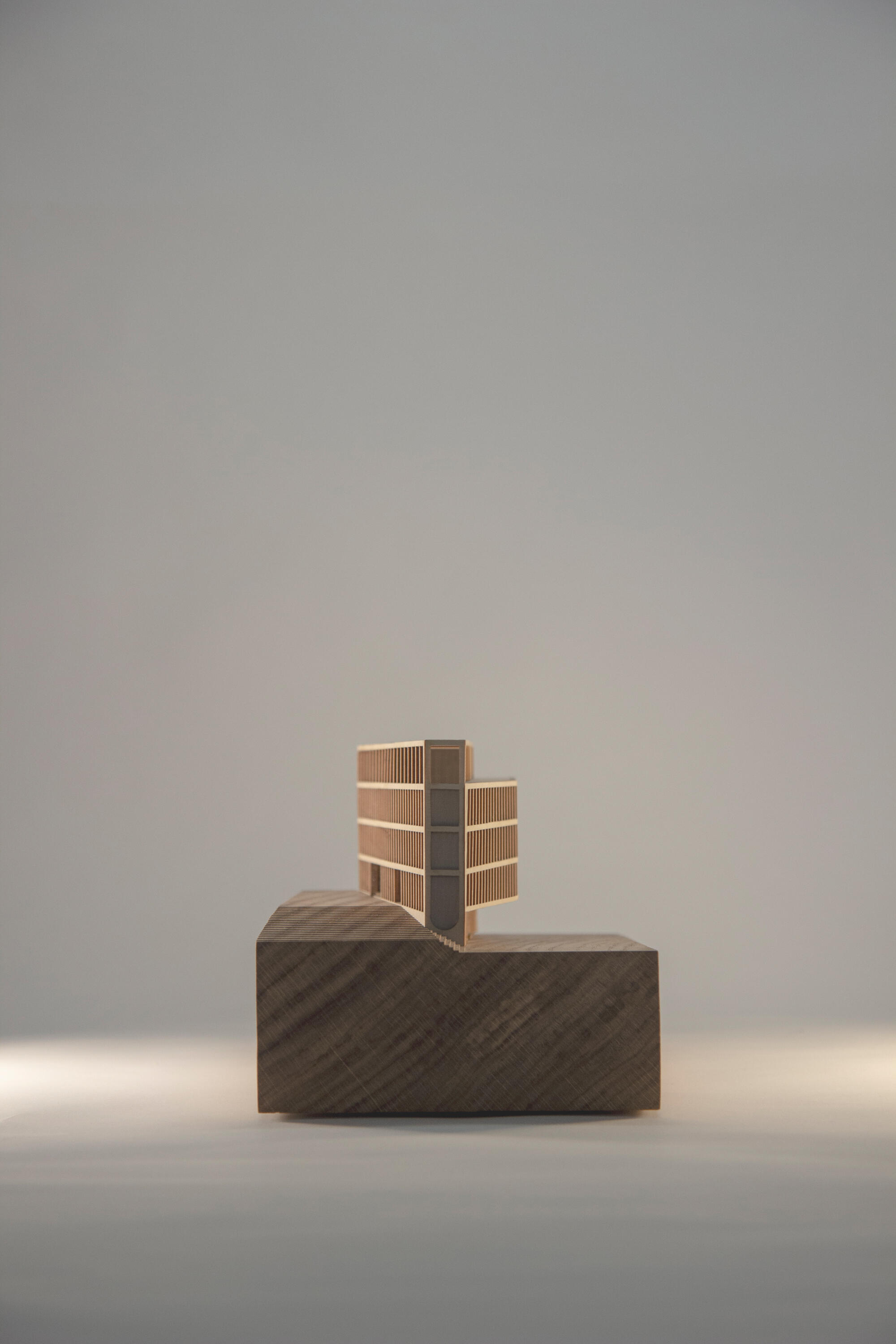


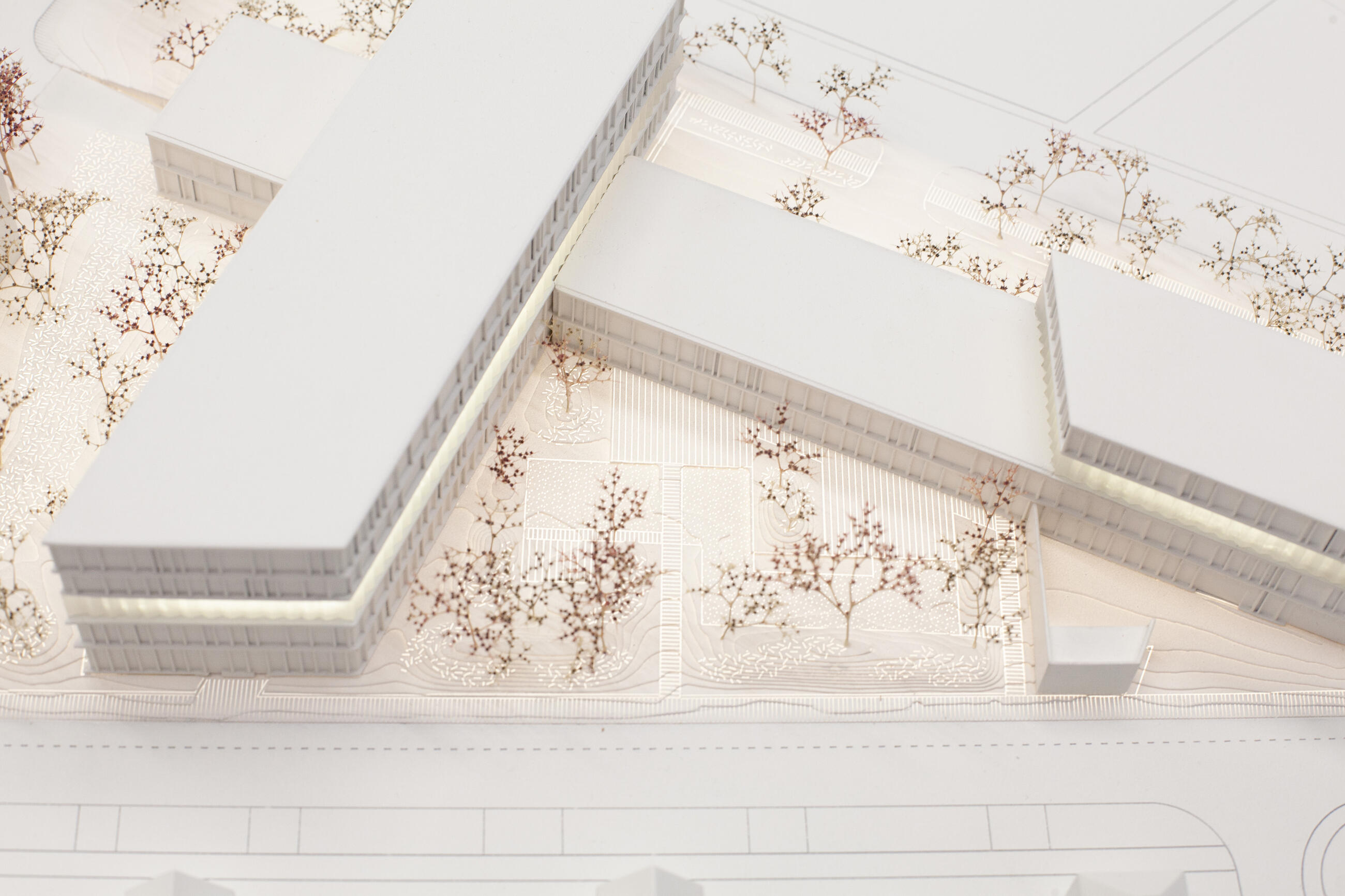


When a single trend dominates the path forward, it is almost certain that an alternative direction exists alongside it—one that is worth following. Today, digital tools dominate both design and presentation, yet they cannot replace a real, physical experience. The founders of the studio Maketa Modelmakers—architect Jakub Kolárovič and product designer Viktor Kyselica—believe that the physical model still has a firm place. They continuously develop ways to communicate architecture, urbanism, design, and services in a manner that is both clear and authorial. Their more abstract, sculptural approach is increasingly sought after by developers as well.
– What motivated you to focus on architectural models at a time when visualizations dominate?
Digital tools can represent a project convincingly, but only a physical model transfers it into reality—into mass, scale, and space. Visualizations work with an idealized viewpoint; they are interpretative and often selective. A model, by contrast, is confrontational—it cannot be “lit” to advantage or concealed. That is precisely why it remains a fundamental tool in the architectural process for us.
– You often say that you approach model-making “a little differently.” What does that mean in practice?
A model is an authorial work shaped both by the client and by our own signature. Its informational dimension is supported by aesthetics, which is why a model should be visually engaging and capable of functioning in space. We understand it more as a sculpture, created through a combination of different crafts. We are drawn to an honest materiality that helps express how the client thinks about the proposal. We particularly value the moment when we “fit” into their concept and help move the project forward.
– What types of projects do you usually work on?
Most often we work on competition models and urban planning models. In competition projects, communication with the client is extremely intensive, and the design frequently evolves simultaneously with the model; deadlines are unforgiving. For developers, we also produce working urban planning models used to test concepts. In public projects, the aim is to clearly present the proposal to a broad audience.
At the same time, we also participate in marketing activities. In addition to static models, we create dynamic animatronic objects that are engaging and easily understandable for different groups of viewers.
– Do you perceive a difference in how architects and developers use models?
Architects tend to use models as a tool for thinking and testing a design, whereas developers see them more as a medium for communication and presentation. Competition and developer models usually have a stronger informational dimension and emphasize the legibility of the overall composition. Architectural models, by contrast, often focus more on detail and authorial expression.
– How does a physical model present large-scale urban concepts?
For extensive territories, a model helps simplify complexity. It allows relationships between volumes, public space, and landscape to be understood even by people who cannot read technical drawings. In this sense, it functions as a universal language.
– How demanding are the development and production processes?
Urban planning models are often the most complex, as they combine scale, precision, and time constraints. Coordinating production and maintaining consistent scale across different technologies is crucial. Animatronic models, on the other hand, tend to be more time-intensive—their development can take several months. They are always prototypes that must reliably operate for thousands of hours.
– What determines the level of abstraction and detail?
We always start from the brief—what the model should explain. Sometimes we need to convey the sense of a project blending with its surroundings; at other times the opposite. Through the selection of materials, we can emphasize the client’s intention or, conversely, make it lighter. The model, therefore, functions not only as an informational tool but also as an expressive medium.
– Do you combine traditional and digital technologies?
In terms of materials, we use resin, polymers, plaster, wood, and metal. We try to work with raw materials and avoid ready-made model-making components as much as possible. Digital technologies help with precision, but the final character of the model is often shaped by hand.
When it comes to interactive elements, we work with lighting design, projection, or 3D mapping. Recently, we have been particularly drawn to animatronics, where the model shifts from a passive object into movement and interaction. We would like to apply this principle more widely to architectural and urban planning models as well.
| Professional | Maketa Modelmakers |
|---|---|
| Website | www.maketa.sk |
| Social media | www.instagram.com/maketa_modelmakers |
| Photo credits | Jakub Kolarovič Katarina Konradova Viktor Kyselica |
| Collaborators and suppliers | |