Matěj Hájek | Exploring the Extremes of Matter
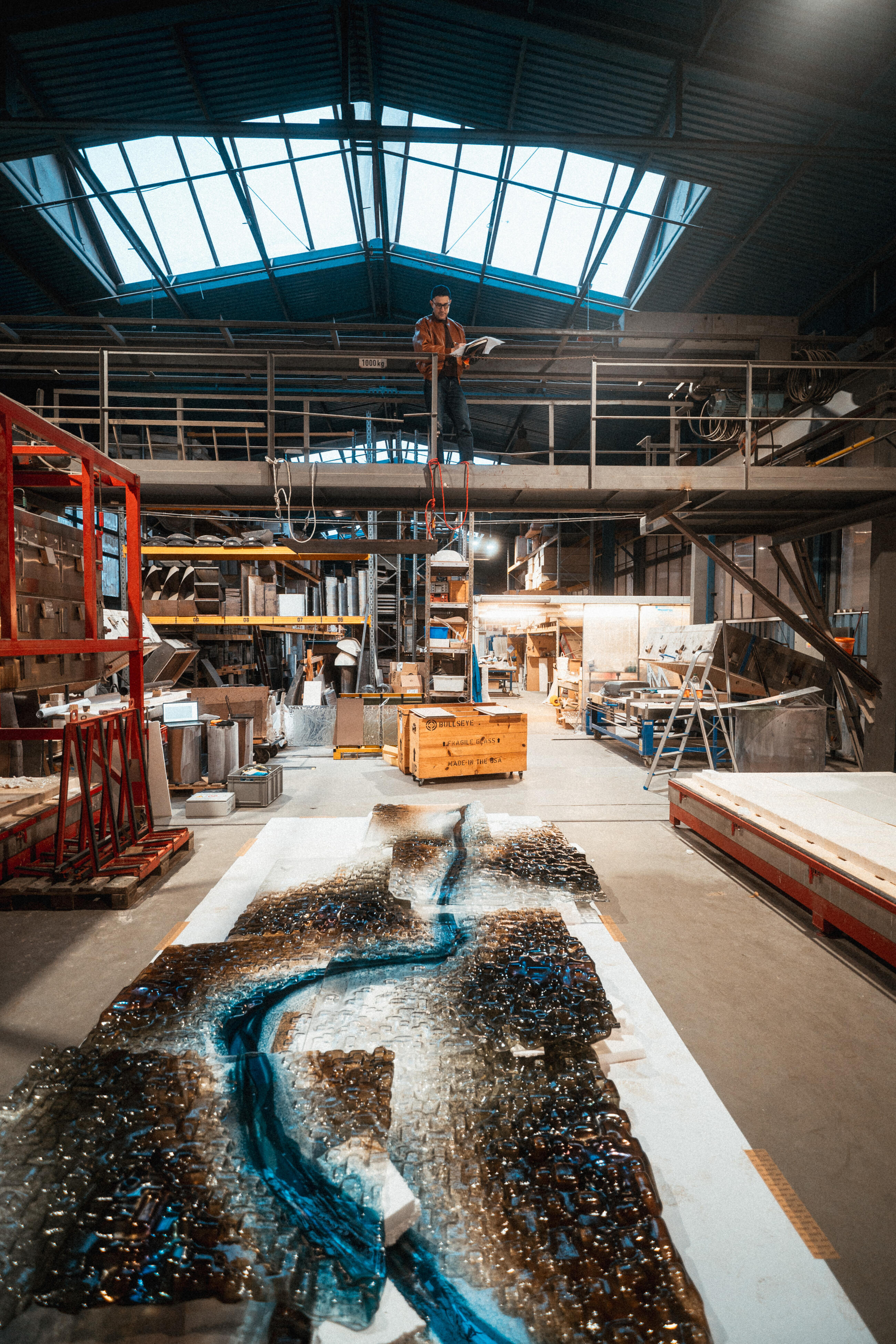
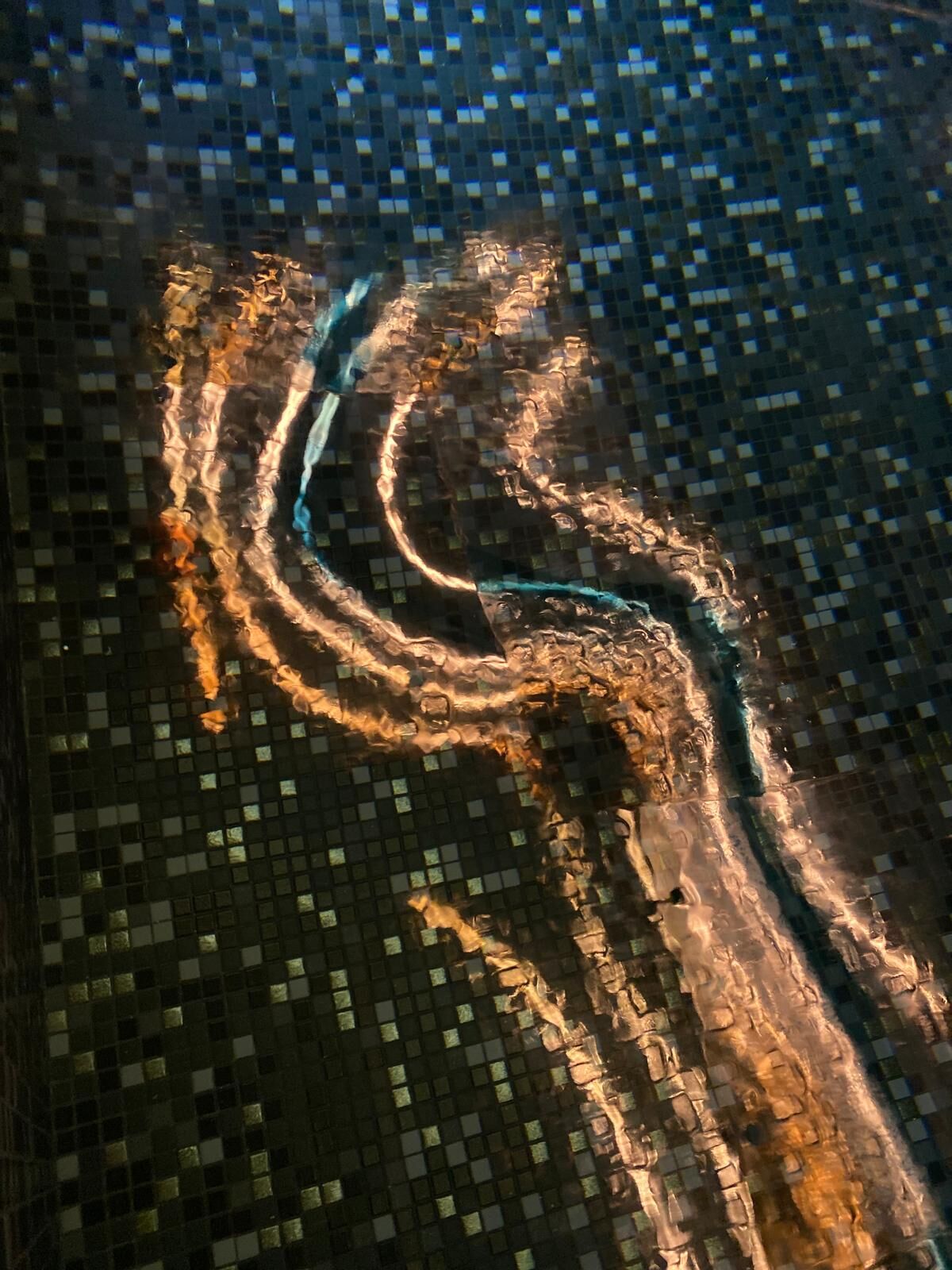
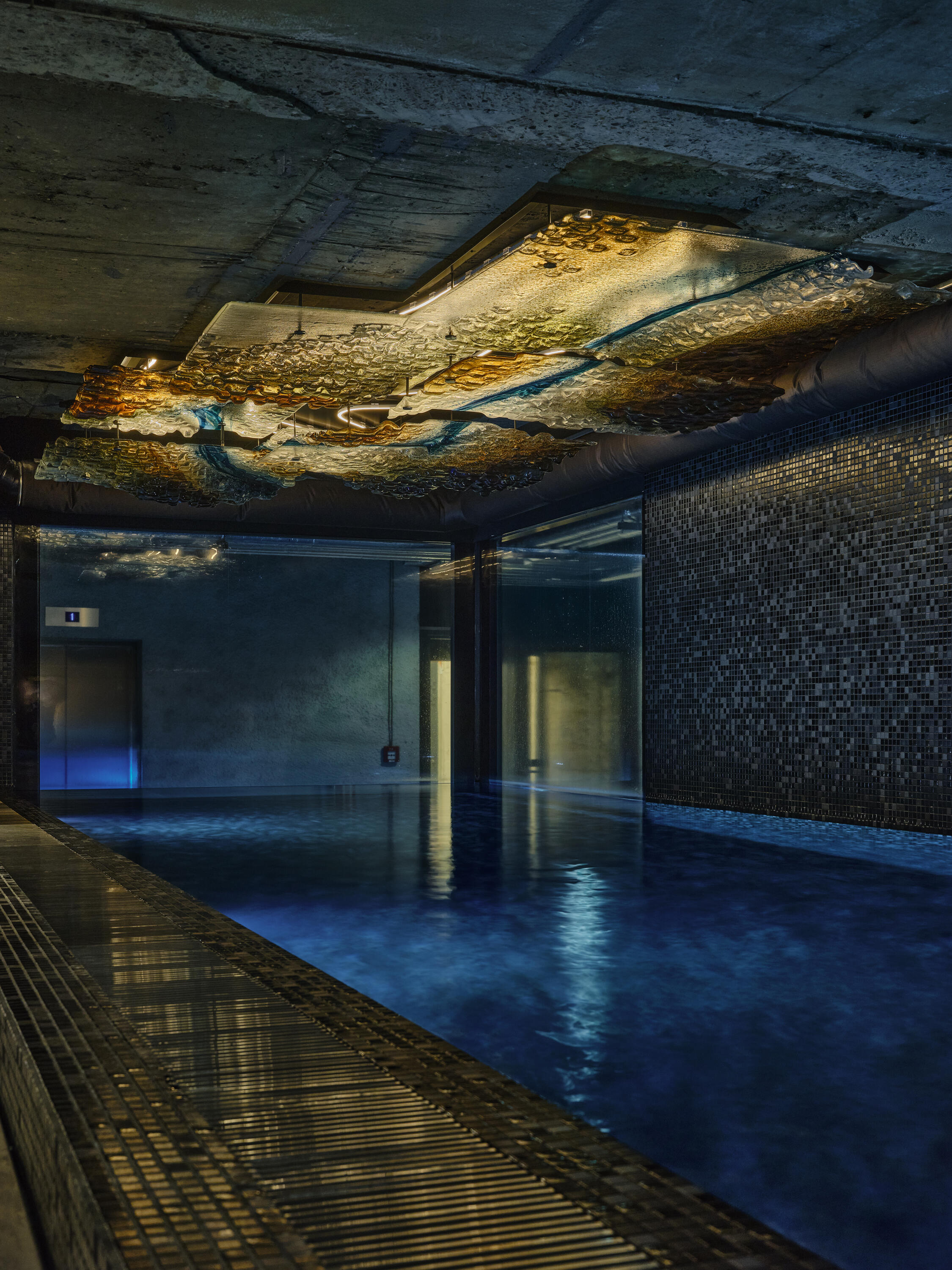
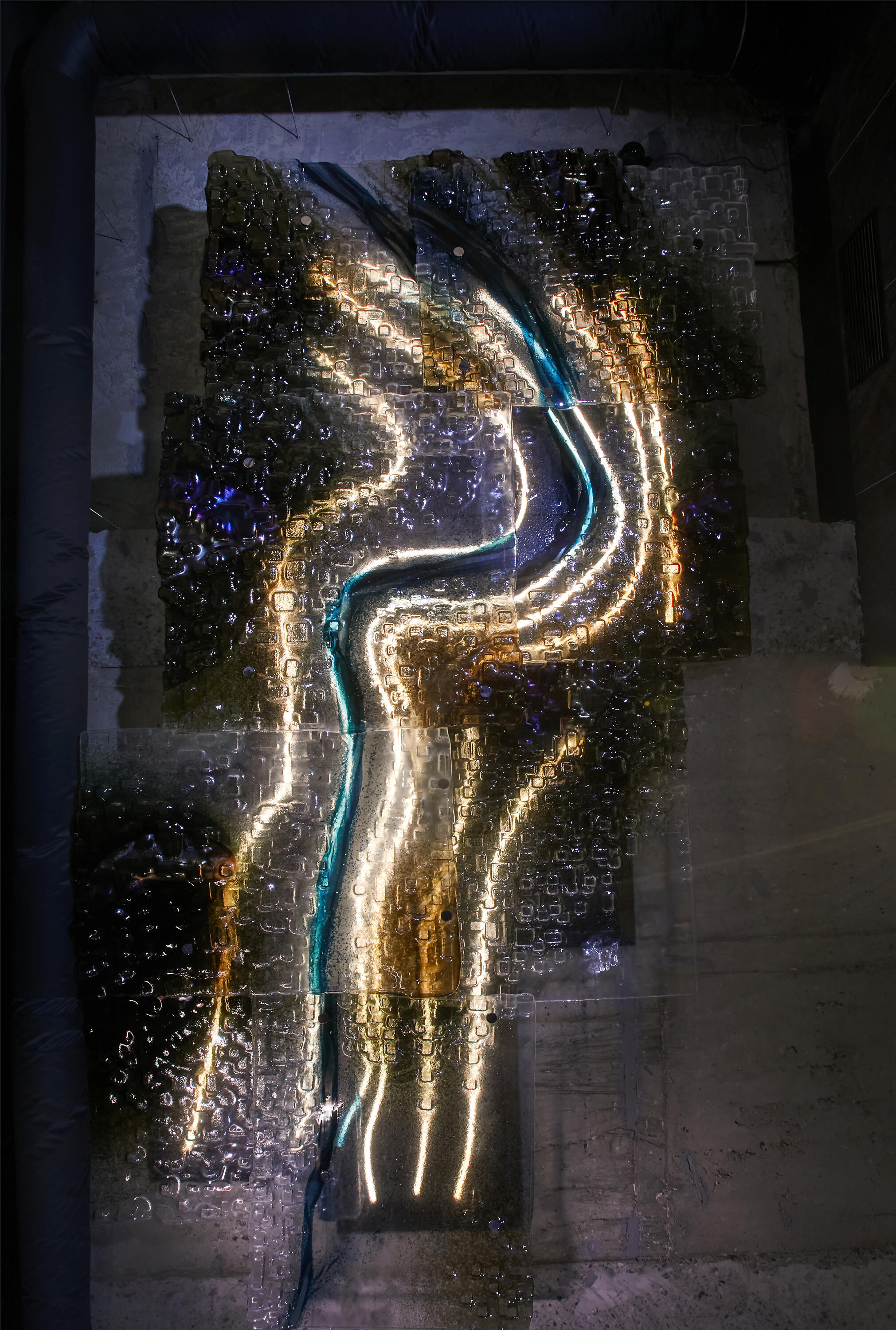
“Better a broken arm than a broken spirit” is the motto of sculptor Matěj Hájek and his SKULL studio. Stepping outside the comfort zone is Matěj’s creative drive—whether through critical interventions by the Ztohoven collective (and beyond), the design of children’s playgrounds to which he even devoted his dissertation, or the realization of technically demanding art objects. Adventures at the edge of what is possible also marked the creation of the glass sculpture Meander, suspended above the pool of the Vanguard Residence.
“When you embark on something that’s right on the edge, you need a partner willing to go there with you. Here, first and foremost, it was the client—who allowed me, without prior experience, to create a four-metre sculpture hanging above people’s heads,” Matěj comments with a smile on the genesis of his first glass work of this scale, created together with TGK technologists under the auspices of Lasvit Fusion.
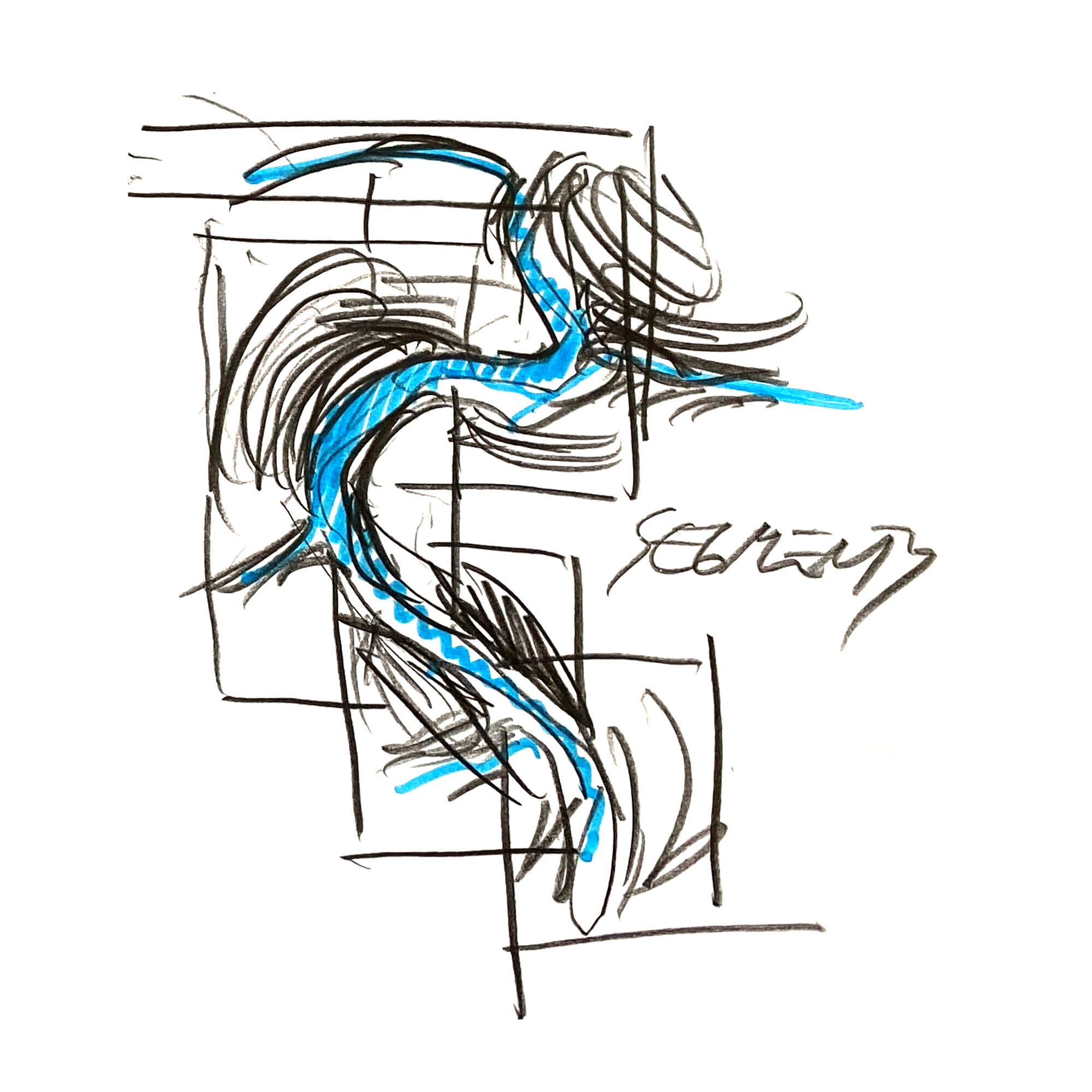
Vanguard Residence—an industrial building boldly revitalized by Central European standards—offers extreme experiences in the best sense of the word, from underground levels to the rooftop. From the highest floors, where SKULL studio designed the residence’s iconic loft, views open up that recall the idyllic infinity of Dutch landscape paintings. It is precisely the expansive landscape of the Vltava Valley that became the template for Matěj’s relief Meander. “I have a deep relationship with the Vltava and rivers in general. This particular meander from Zbraslav to Braník is my favourite stretch, interesting for its landscape-sculptural quality,” he explains, pointing to a lifelong source of inspiration.
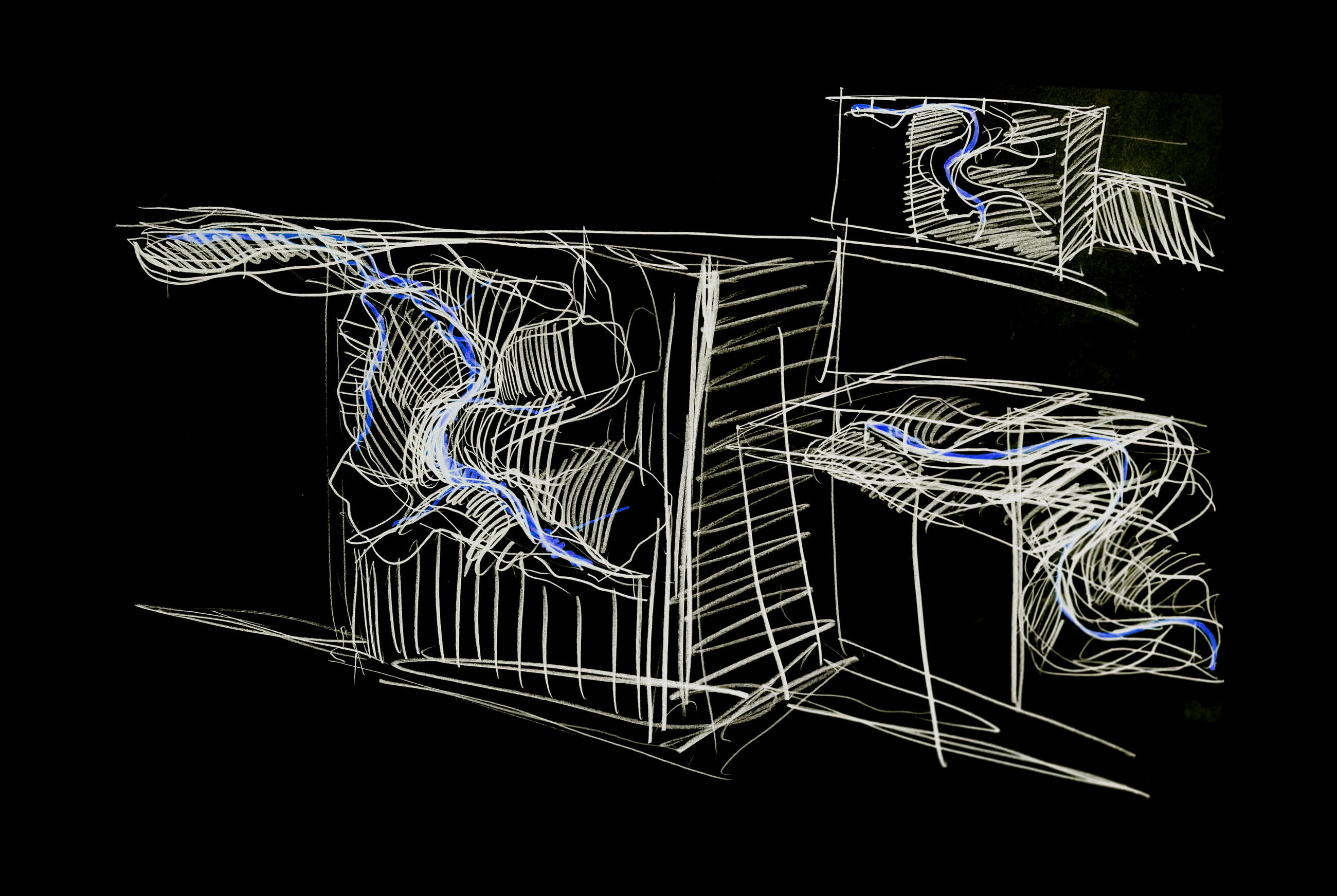
The spa for which the relief was designed, by contrast, lies underground—much like a riverbed. In this specific space of the former bunker, the architects of OOOOX studio, who invited Matěj to collaborate, fully embraced the brutalist rawness of the concrete skeleton. In developing the concept, the sculptor was guided by an image of a post-apocalyptic vision—a memory of what the Earth once looked like. “Such an imagination can be oppressive and yet still carry a sparkling beauty. What mattered was the force of that tension—transferring a vast landscape into an enclosed cave, a bunker,” he explains.
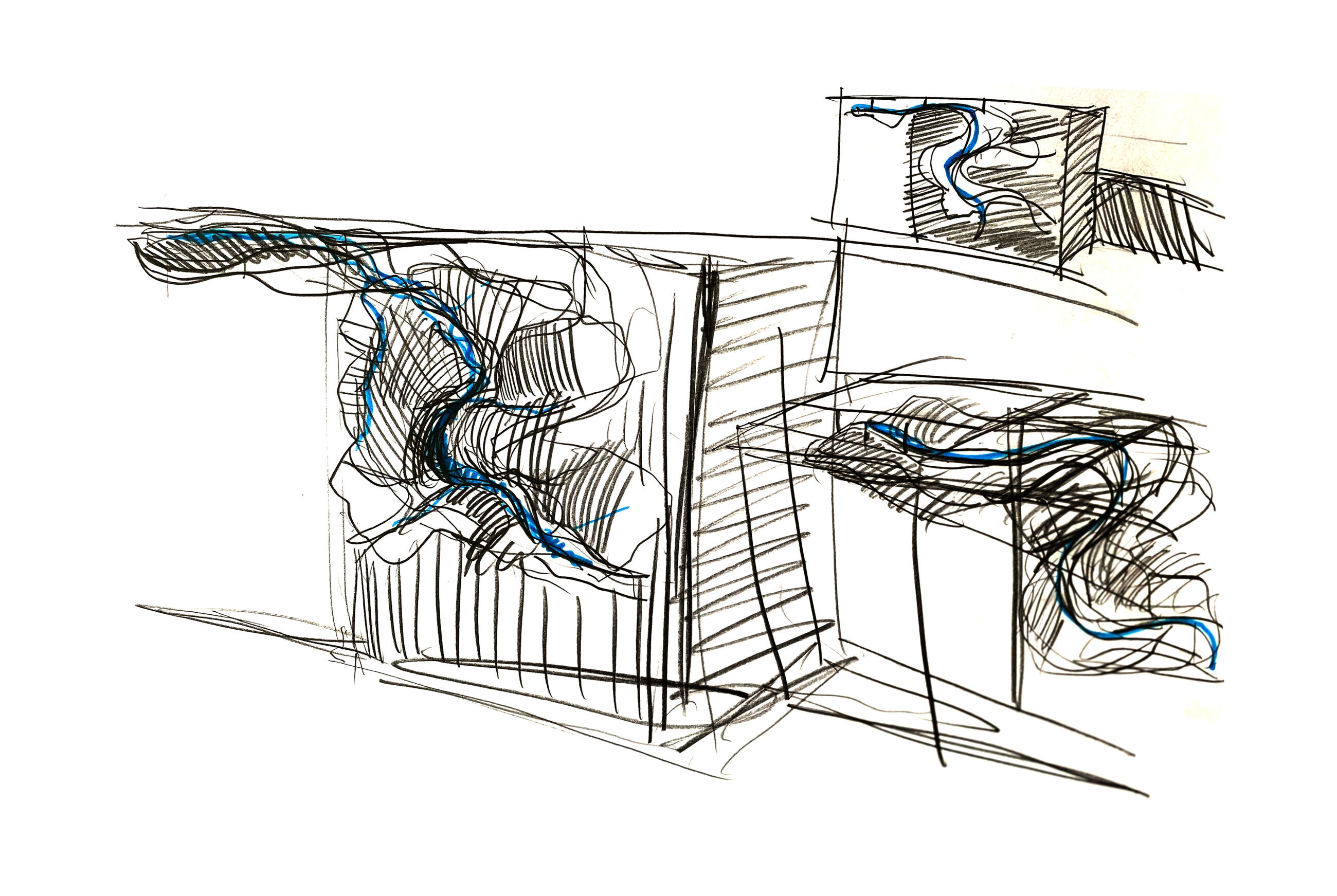
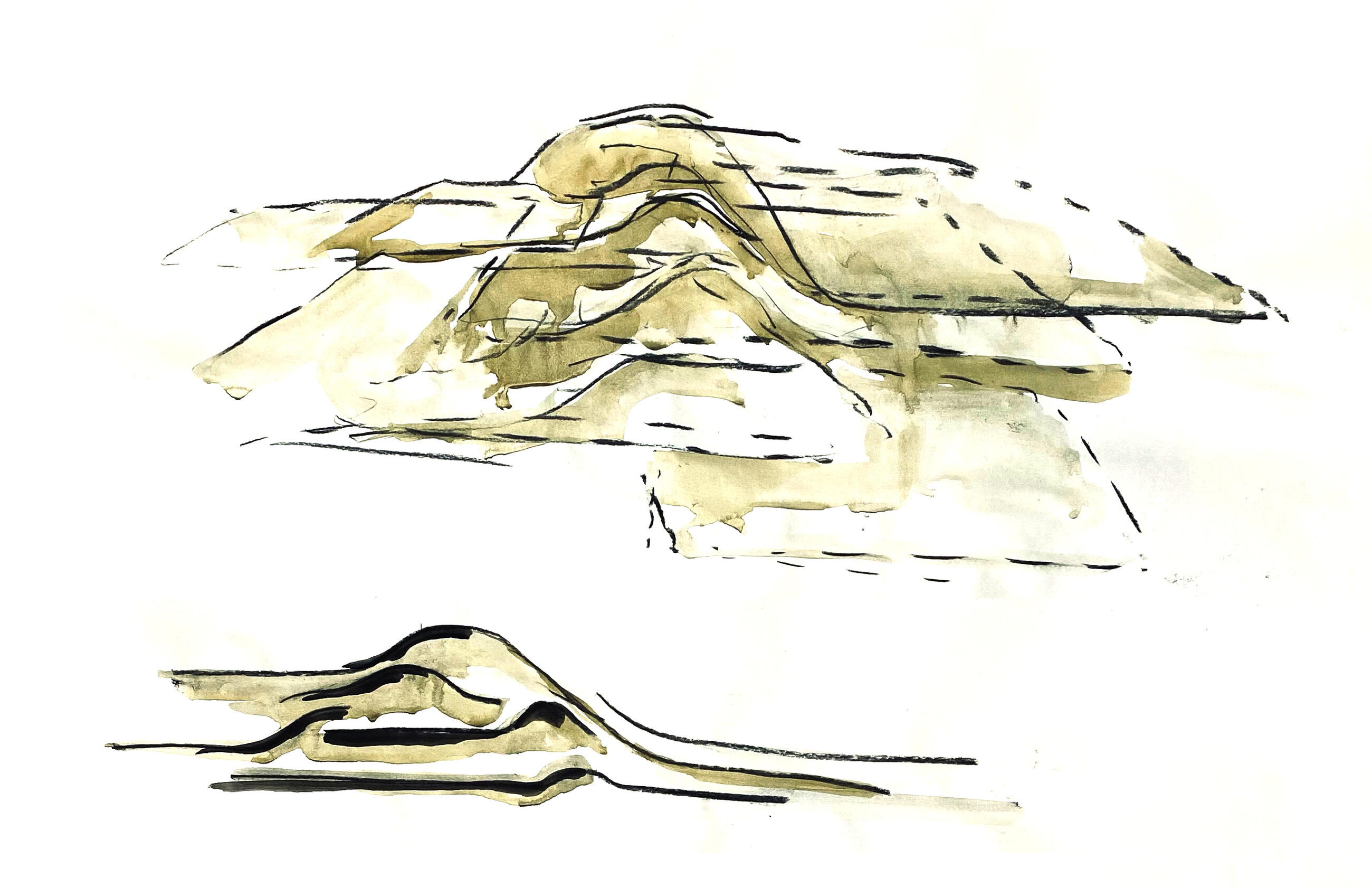
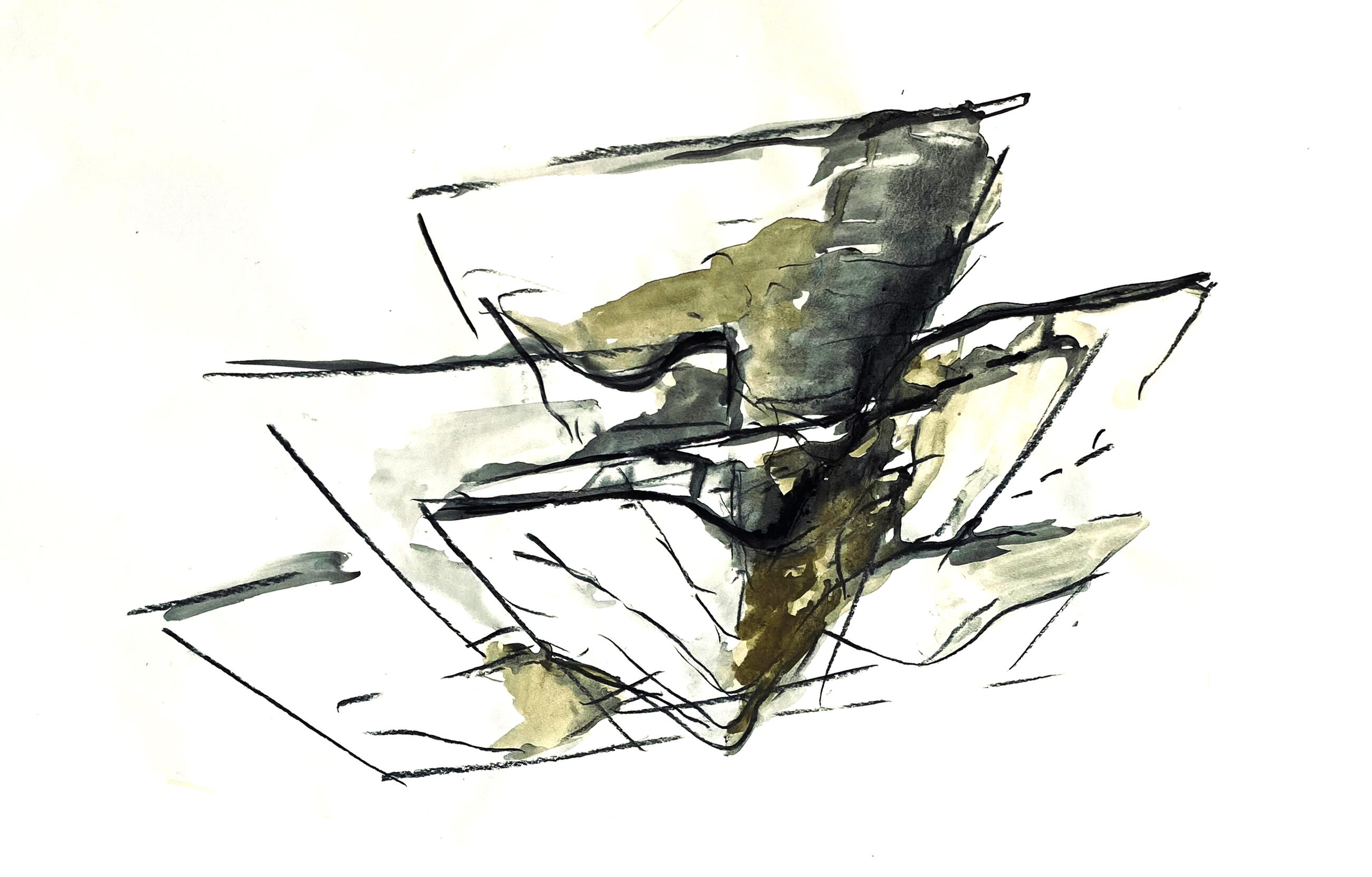
Matěj considers geology and topography powerful sculptural themes. “A river shapes the landscape while simultaneously revealing its layers—and it was precisely this making the invisible visible that became my main motif.” Translating this vision into a glass relief, however, required a series of demanding experiments.
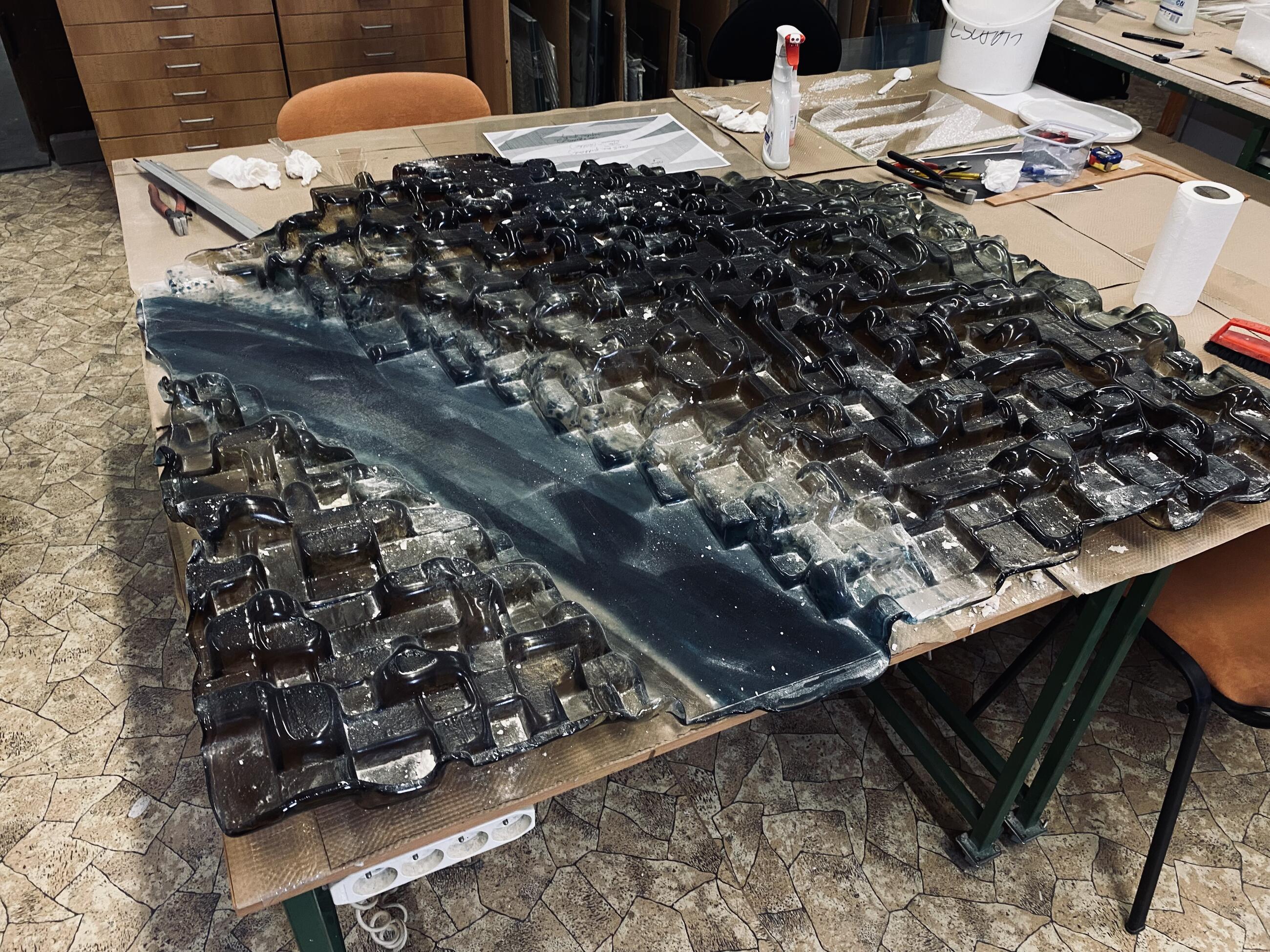
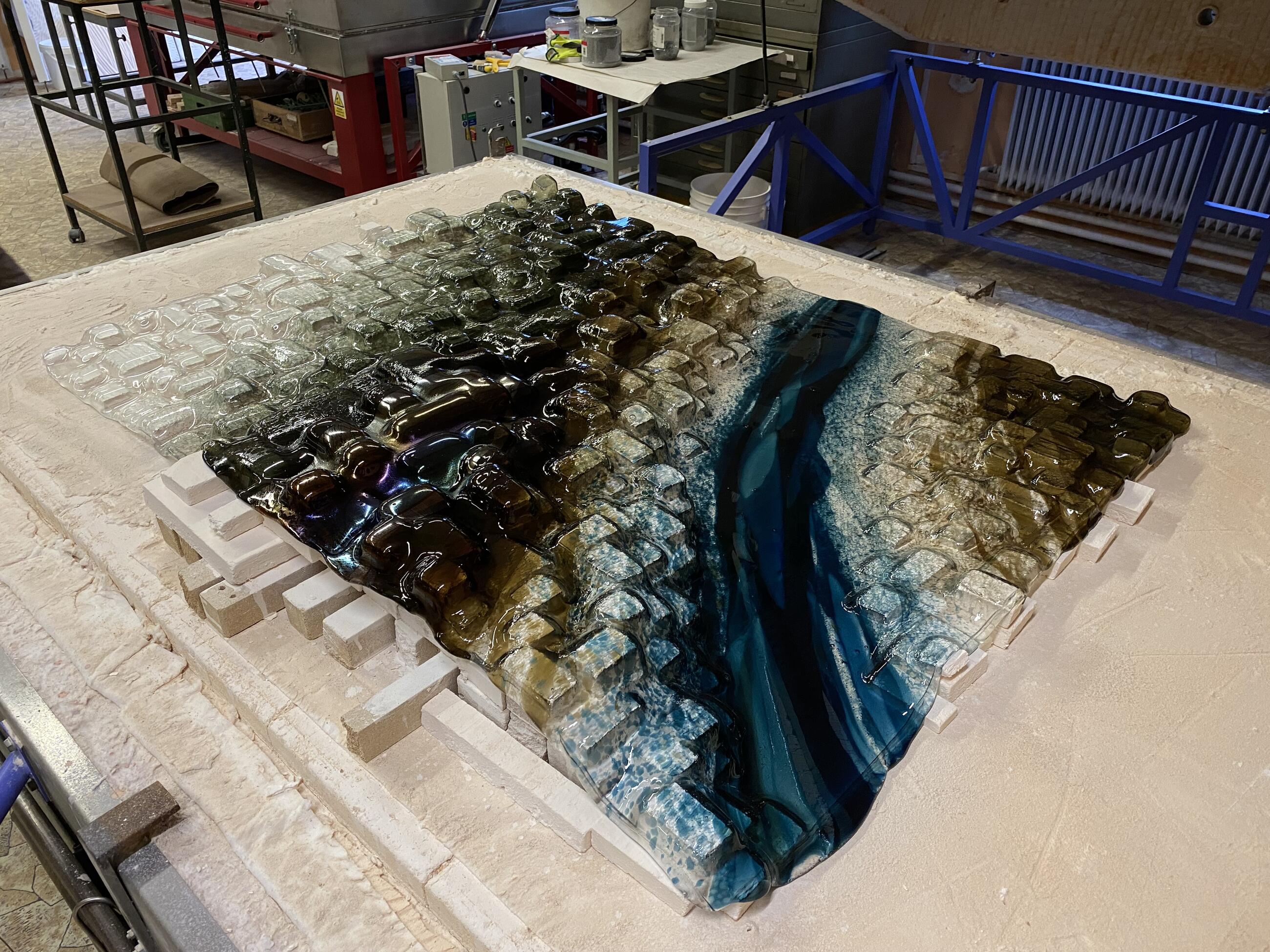
He initially collaborated with Kolektiv on material and process sampling; the work was ultimately realized with TGK technologists under the Lasvit Fusion umbrella. The kiln-formed glass—combining frits (crushed glass) with full sheets of Bullseye material—was calibrated so that the interpenetration of individual components would evoke a geological cross-section through a three-dimensional effect.
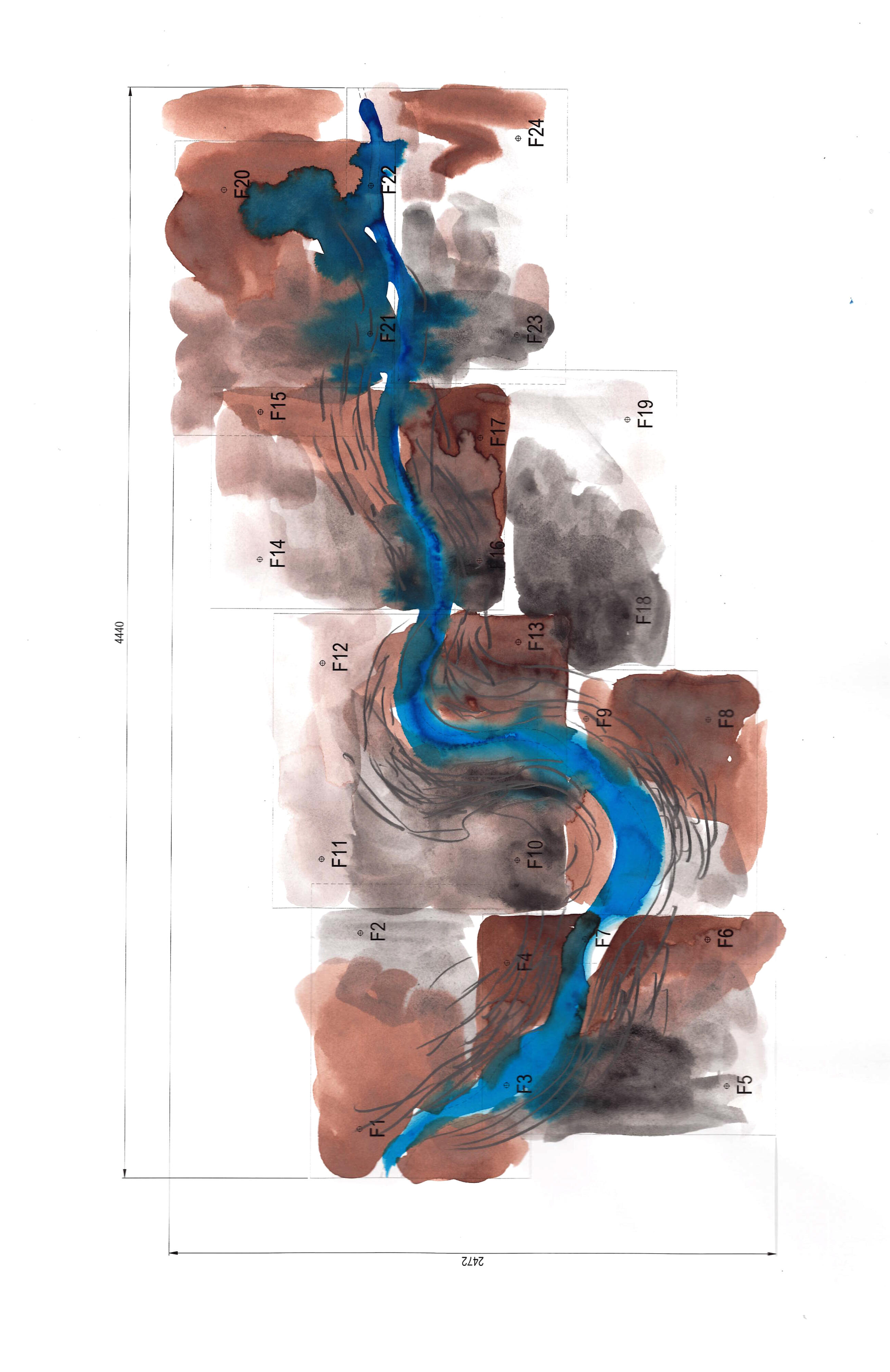
An initial watercolour sketch proved the clearest way to communicate the concept to the technologists. “What was my means of expression was read by Jaroslav Černý from TGK as a literal instruction for the effect we wanted to achieve together.” A full-sheet sample eventually revealed that the side bearing the mould imprint had greater detail, prompting the relief to be remodelled inversely.
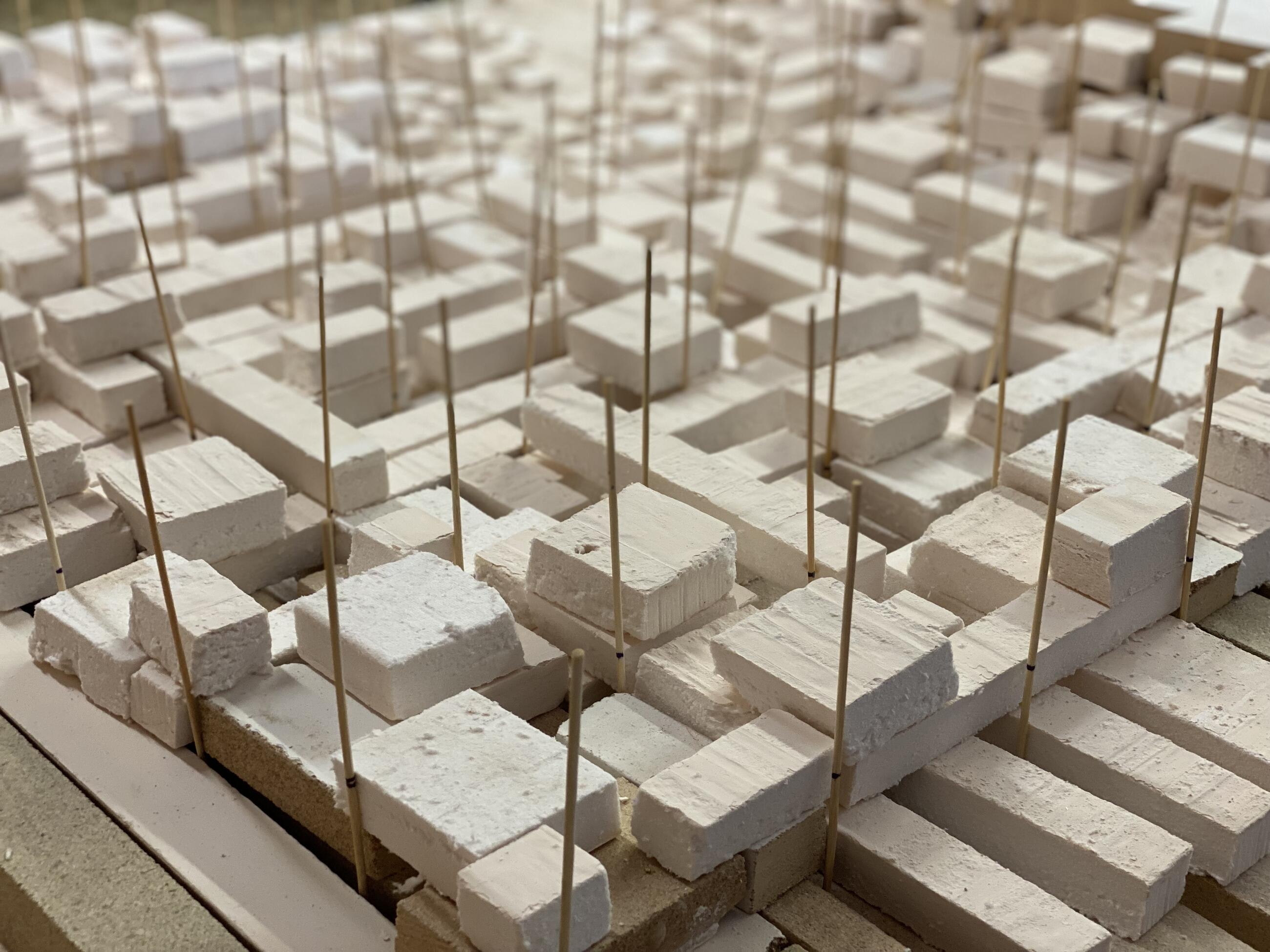
Although machine-milled moulds are typically used for kiln-formed glass of this scale, Matěj prepared his by hand. “There’s a certain irregularity in drawing that gives the work organic quality and vitality—and that would be dulled by machinery. I transferred the point grid of the topographic situation into 10 × 10 cm segments and assembled the entire sculpture cube by cube by hand. Adhering to the topographic grid ensured that the individual parts truly connect through their layers,” he explains, describing the time-consuming and meticulous process of making the moulds.
He describes the dynamic relationship between artist and technologist as a constant dialogue between intention and feasibility. “The technologist helps keep the design grounded in reality; they know the limits of the material—when it will crack, when it will succumb to thermal shock. You can’t pursue a purely authorial ambition without respecting technological constraints. On the other hand, it’s crucial to find a partner brave enough to say: This might just work.” As he was told after the successful completion, some details indeed pushed the boundaries of technological tolerance.
The original technological considerations, however, were even more ambitious. Matěj initially sought to achieve the effect of interpenetrating geological layers or the mixing of clear and turbid water through the fusion of clear and basalt glass. This technology—one he says lacked sufficient experience, resources, and perhaps even courage—remains something he would like to return to one day. “It’s a kind of sculptural obsession with pushing possibilities to the extreme. And it’s not just mine—you can see it in Baroque sculpture as well,” he explains, reflecting on sculptural ambition.
In any case, his experience with glass technology continues to advance his artistic practice. He is currently developing a model for a freestanding object with a landscape relief, combining kiln-formed glass with a neon light source. “Glass objects are an attractive theme for me, but they also belong to the category of top luxury—and that clientele is still only taking shape here,” he concludes, alluding to the inherent financial demands of working with glass.
| Professional | Matěj Hájek |
|---|---|
| Website | www.matejhajek.com skullstudio.net |
| Social media | www.instagram.com/matej_otto_hajek www.instagram.com/skull_studio_prague |
| Photo credits | Bet Orten, www.betorten.com, bet@skullstudio.net Matěj Hájek, www.matejhajek.com skullstudio.net |
| Collaborators and suppliers | |